Clement 1
23 November

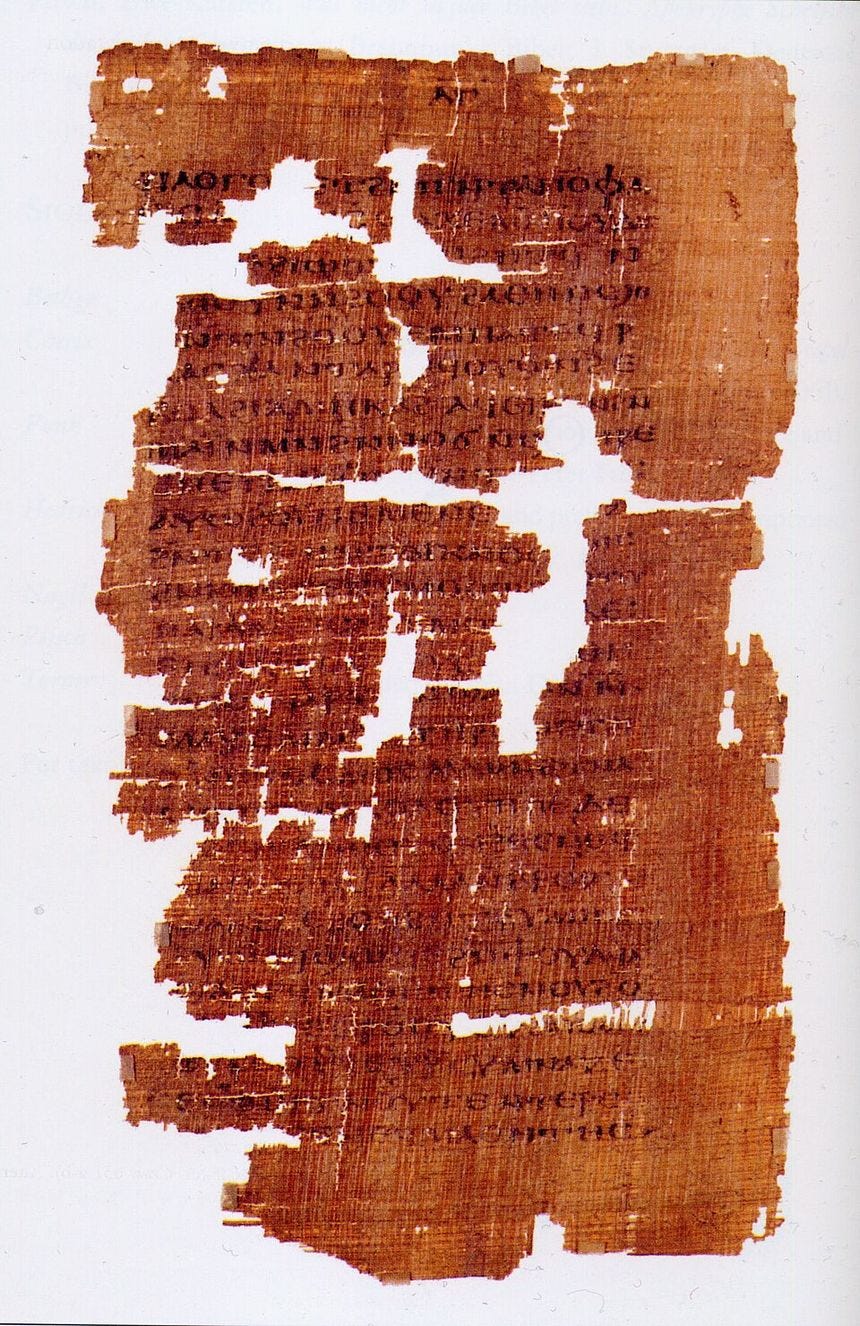
In drafting this (albeit long) discussion of what Clement wrote and how we can learn from this we need to make one note: 1 Clement is often considered the first discussion of apostolic succession. This is sort of backwards: Peter appointed two priests (Linus and Achleus) to run the congregations in Rome, and the early Church historians consider that Clement was his designated successor. So when we look at what he wrote about following the church leaders in context it is very grounded in an argument from Nature, and in Chapter one of his letter to Corinth he praises them for their behaviour and belief, because they were doing what is good and proper.
Brethren, the sudden and unexpected dangers and calamities that have fallen upon us, have, we fear, made us the more slow in our consideration of those things which you inquired of us: As also of that wicked and detestable sedition, so unbecoming the elect of God, which a few headstrong and self-willed men have fomented to such a degree of madness, that your venerable and renowned name, so worthy of all men to be beloved, is greatly blasphemed thereby. For who that has ever been among you has not experienced the firmness of your faith, and its fruitfulness in all good works; and admired the temper and moderation of your religion in Christ; and published abroad the magnificence of your hospitality; and thought you happy in your perfect and certain knowledge of the Gospel? For ye did all things without respect of persons, and walked according to the laws of God; being subject to those who had the rule over you, and giving the honour that was fitting to the aged among you. Ye commanded the young men to think those things that were modest and grave. The women ye exhorted to do all things with an unblameable, and seemly, and pure conscience; loving their own husbands, as was fitting: and that keeping themselves within the bounds of a due obedience, they should order their houses gravely, with all discretion. Ye were all of you humble-minded, not boasting of anything: desiring rather to be subject than to govern; to give than to receive; being content with the portion God hath dispensed to you: And hearkening diligently to his word, ye were enlarged in your bowels, having his sufferings always before your eyes. Thus a firm, and blessed, and profitable peace was given unto you: and an unsatiable desire of doing good; and a plentiful effusion of the Holy Ghost was upon all of you.
As someone raised old school Presbyterian, the idea of decency and good order in our meetings resonates. I am uncomfortable with chaos and strong emotion. It makes me less motivated, less productive. I would rather not talk about myself. It is not about myself: it is about God. Yet this idea is as unfashionable among the elite. I’m quoting Ms Harrington, who, being English, has repented of being in the elite and now worships within conflict around apostolic succession. She argues we should forget the fashion, ignore the last few sentences, and return to the beginning.
By “identity” I don’t mean special victim categories, or some nebulous self-actualisation thing. I mean the soul, in approximately the Thomist sense: an immaterial aspect of every human being, that is the form of the body, that is characterised by rational consciousness, and is not merely an epiphenomenon of that body. That’s a strong set of claims in this day and age, but for reasons that I hope will become clear, this is a day and age that calls for strong claims. As we’ll also see, what used to be called the “soul” has become attenuated into this far thinner and more mercurial term, “identity”, for reasons that are themselves bound up with at least some strands of feminism. Those reasons are also bound up with the digital age. And by this I don’t just mean Facebook or Twitter or whatever, but the whole technological paradigm that began to crystallise following the two World Wars, and which has extended the overall existing trajectory of modernity but turned it inward, upon humans ourselves. In fact a more accurate term for my topic tonight isn’t “feminism and identity in the digital age” but “feminism and identity in the transhumanist age”. Because we’re already in it, and have been for the last 50 years or so.
So what do we find in the beginning? That we should be obedient to Christ, who is our head, and to live in peace. I am far less interested in the governance of structure of a church than in the obedience of all to the word of God, and that those of us in the pews are encouraged to follow Christ. Again, from I Clement, this time chapter 14.
Therefore it is right and proper, brethren, that we should be obedient unto God, rather than follow those who in arrogance and unruliness have set themselves up as leaders in abominable jealousy. For we shall bring upon us no common harm, but rather great peril, if we surrender ourselves recklessly to the purposes of men who launch out into strife and seditions, so as to estrange us from that which is right. Let us be good one towards another according to the compassion and sweetness of Him that made us
The problem I have been facing is those who are arrogant and unruly are now running the mainline churches. This led me to anger: a wish to not look at the treasures that are within the English Prayer book, as if the current Clown Folk, doomed to destruction, have ruined that which greater divines than they were built over generation to generation. The Call of Clement was for unity: the call for this week is for the same.
Collect, 29th Sunday Ordinary Time.
Almighty and everlasting God, whose will it is to restore all things in thy well-beloved Son, the King of kings and Lord of lords: Mercifully grant that the peoples of the earth, divided and enslaved by sin, may be freed and brought together under his most gracious rule; who liveth and reigneth with thee and the Holy Spirit, one God, now and for ever. Amen.
I am not that interested (Sorry Sedes! Sorry Orthobros! Sorry Reformedbros!) with the issues of apostolic succession. I am much more interested in the practical advice that Clement gives during what was a time of persecution. His letter is permitted with the idea that we should obey God. To find out what to do, we should seek the true, and follow Christ. I am quite aware that the current shepherds of the flocks are corrupt: there are no exceptions among the bigger churches, though the Orthodox were winnowed within my memory by the tyranny of the progressives and are more healthy that the mainline. From a Sede brother:
And for the past sixty odd years the visible Church has been taken over by satanists and freemasons, (although I repeat myself). They must take such glee in seeing the faithful bow and scrape at the odd scrap that they throw down from their high table. The latest is the plea to your local bishop for permission to say the Latin mass, which if successful you will be able to enjoy for a measly couple of years. The three popes after Vatican II did their best to heat the water slowly. The last two usurpers to the throne have dialed up the heat with abandon. They don’t care anymore that you suspect or that you even may know in your heart the true and awful nature of things, because they are supremely confident that you will not act. Because you must remain “obedient” even in the face of outright heresy. Well, I will not submit to an occupied Rome, nor pretend that it is something that it is most obviously not. You can practice any form of Christianity, or indeed any religion that you like, from Buddhism to Islam to ugga-booga in the Amazon rain forest, and the fiends in the Vatican will not only give you a free pass but will actively bless your misguided faith. But there is one form of religion that they will not bless, that they will curl up their lips and sneer at and draw away from like vampires recoiling from garlic: And that is sedevacantism. That they will not condone.
I would add the hard core reformed are fairly well hated as well. Being a reformed believer or a Westminster Confession adhering presbyterian is a good way to ensure you will never, ever be rewarded with praise and honour. But these are the leaders that Jeremiah curses. Our calling is not to obey the satanic. It is to endure in our obedience of Christ.
Jeremiah 23:1-6
Woe to the shepherds who destroy and scatter the sheep of my pasture! says the LORD. Therefore thus says the LORD, the God of Israel, concerning the shepherds who shepherd my people: It is you who have scattered my flock and have driven them away, and you have not attended to them. So I will attend to you for your evil doings, says the LORD. Then I myself will gather the remnant of my flock out of all the lands where I have driven them, and I will bring them back to their fold, and they shall be fruitful and multiply. I will raise up shepherds over them who will shepherd them, and they shall no longer fear or be dismayed, nor shall any be missing, says the LORD. The days are surely coming, says the LORD, when I will raise up for David a righteous Branch, and he shall reign as king and deal wisely and shall execute justice and righteousness in the land. In his days Judah will be saved, and Israel will live in safety. And this is the name by which he will be called: “The LORD is our righteousness.”
Colossians 1:11-20
May you be made strong with all the strength that comes from his glorious power, so that you may have all endurance and patience, joyfully giving thanks to the Father, who has enabled you to share in the inheritance of the saints in the light. He has rescued us from the power of darkness and transferred us into the kingdom of his beloved Son, in whom we have redemption, the forgiveness of sins. He is the image of the invisible God, the firstborn of all creation, for in him all things in heaven and on earth were created, things visible and invisible, whether thrones or dominions or rulers or powers--all things have been created through him and for him. He himself is before all things, and in him all things hold together. He is the head of the body, the church; he is the beginning, the firstborn from the dead, so that he might come to have first place in everything. For in him all the fullness of God was pleased to dwell, and through him God was pleased to reconcile to himself all things, whether on earth or in heaven, by making peace through the blood of his cross.
In short, we need shepherds who are really humble and gentle, not civil servants who act in this way. I’m going to quote an email from Plimico in a minute, but this week I experienced such people: very nice, wanting the niceties, but not understanding that their polite processes mean people suffer. I would rather a man seem foul and be sweet than the wormtounge of our effete controllers.
Every civil servant I have met has been an extremely nice person. Indeed, they cannot be anything else: their job is not to confront and over-rule, it is to scheme, to influence, and to subvert — to manipulate procedural outcomes, and to do it all nicely. You wouldn’t want to be accused of ‘bullying’ after all — that charge is reserved for ministers who forget their place. When they cover up their mistakes, they are simply operating under mandated civil service procedures — to do otherwise would be illegal. Any response or intended consequence diffuses into the whorls and eddies of the organisation’s illegible organogram. Their power is wielded in a detached, postmodern, almost ironic fashion — like trying to perform a ballet in hobnails. Everyone is responsible, so no-one is, and when something does go wrong, wouldn’t it be better if we simply put the matter behind us?
One cannot put the matters of salvation behind us. To be saved and redeemed in this life requires that we do as Christ would do: not the appropriate corporate model of Christ, but the man who turned over the banker’s tables in the temple. Nehemiah, who led the first restoration of the temple after the exile, did the same — he cast the traders out of the temple.
The rules of the church are not the rules of this world. When the political class try to fit the church into their models, it fails. Paul (that pragmatic fisherman) had assistants: it was not a succession of churchly kings. Instead we have Clement saying it is far better to follow than lead, to give than to receive. We should not desire to be the bishop, archbishop or moderator, nor should we demand democracy. For Christ is King, and his kingdom is not of this world.